


Building your website with ChatGPT or Claude: the judgment they don't come with

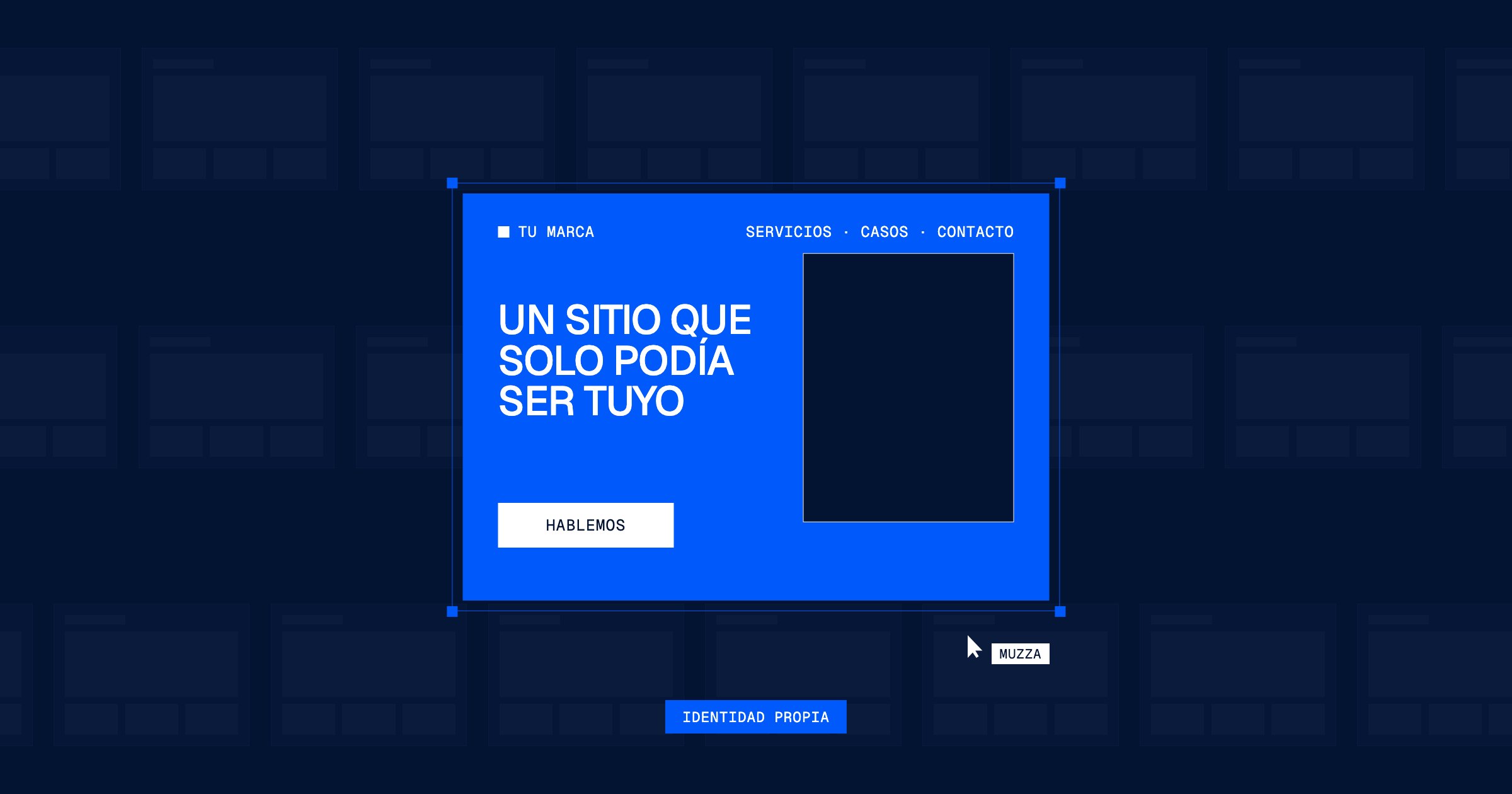
With ChatGPT or Claude you can have a website built in an afternoon. You type "make me a website for my studio", it gives you the code, you publish it and you are done. At Muzza we use both tools every day, so we are not going to tell you they are useless. What we do see, after dozens of websites designed and launched, is that the hard part of a website was never writing the code: it is deciding what goes in, how it looks and what happens after launch. That part doesn't come built in.
Why AI-built websites all look alike
A language model builds the most likely answer. If you ask it for a website, it returns the structure it has seen thousands of times: a hero with a big title and a button, three cards with icons, testimonials and a footer. The colors come from a safe palette and the typefaces from the few that half the internet uses. It isn't badly made; it is averaged.
For a personal project that is enough. For a brand that needs to be recognized, it is a problem: if your site looks like your competitor's, what sets you apart stays hidden behind a design that says nothing about you.
Design doesn't happen on its own: someone has to direct it
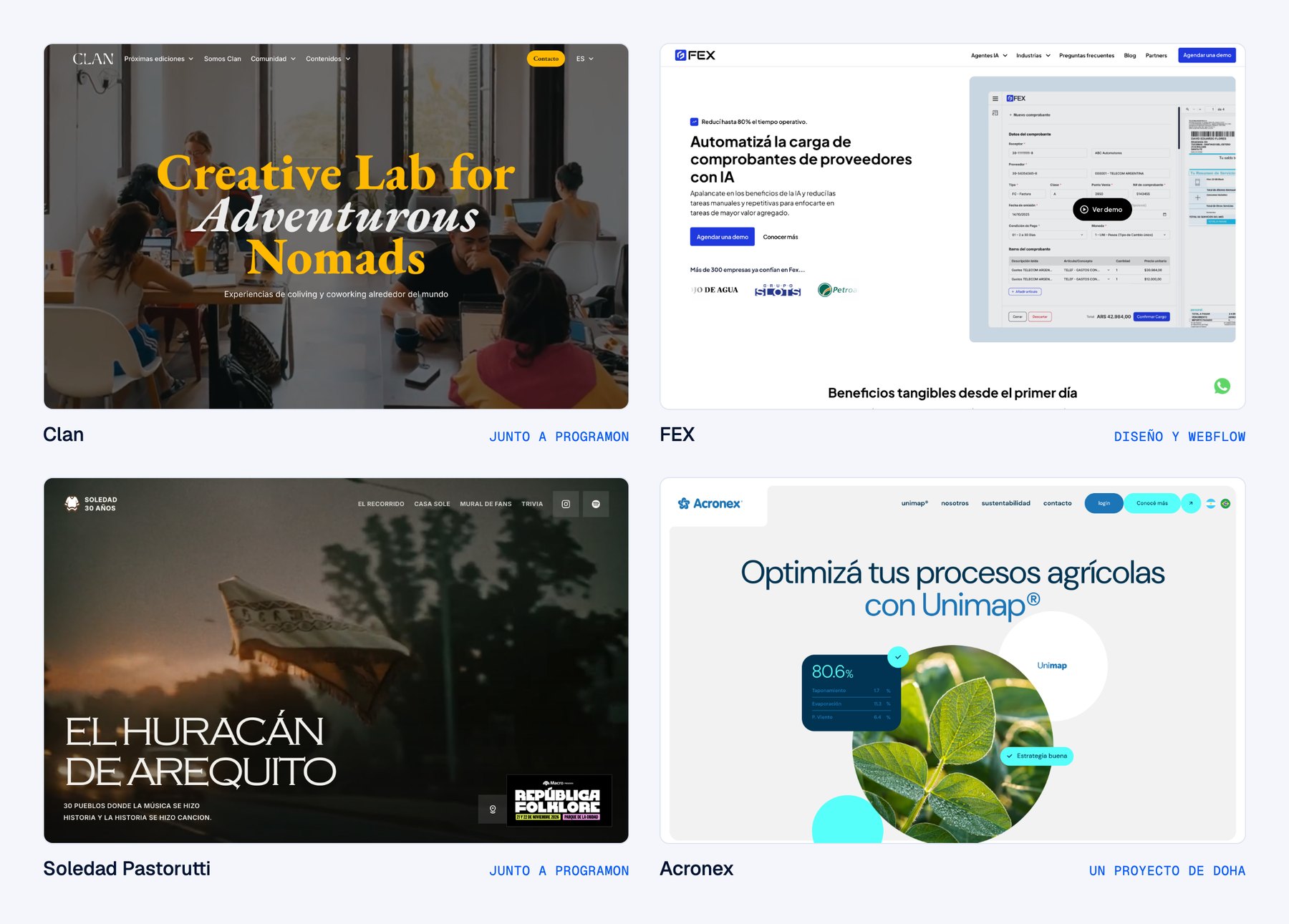
When we design a website, every decision responds to something specific about the brand and the people who will use it. This is how that journey looks in the animation we built for our home page:
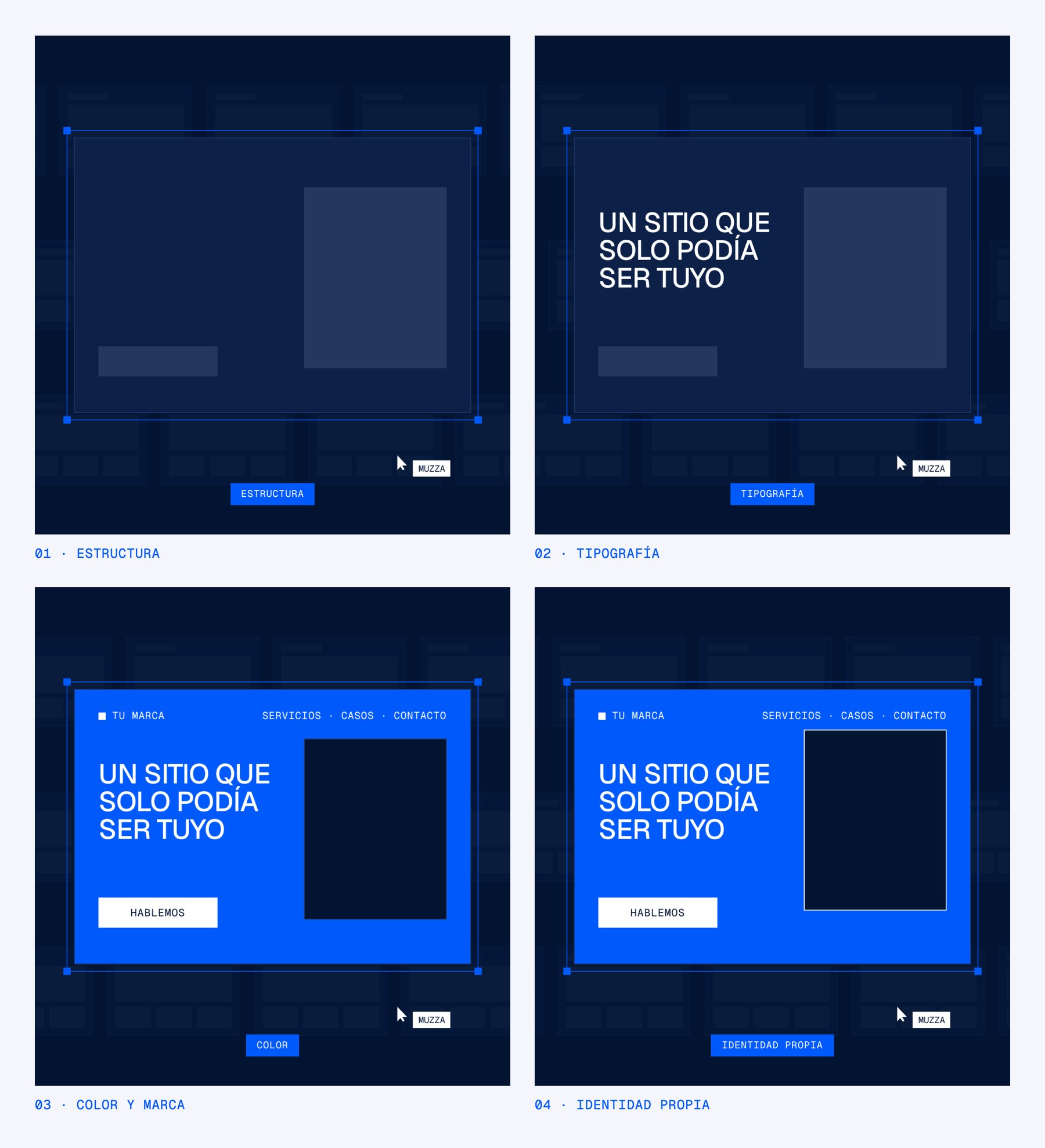
- Structure. Which pages exist and in what order the story is told, based on how your client decides and not on what every site has.
- Typography. A family that matches the brand's tone and reads well on a phone.
- Color and brand. Your palette applied with rules, not this month's trendy gradient.
- Motion. Animations that guide the reading, without filling the page with effects that slow it down.
- Real content. Your projects, your photos and your copy, not stock images or made-up data.
ChatGPT or Claude can carry out each of those things if you ask the right way. What they don't do is know what to ask for, or notice when the result doesn't represent your brand.
What ChatGPT and Claude don't warn you about
There are three questions that almost never come up in the conversation with the AI and that decide whether the site works after it goes live.
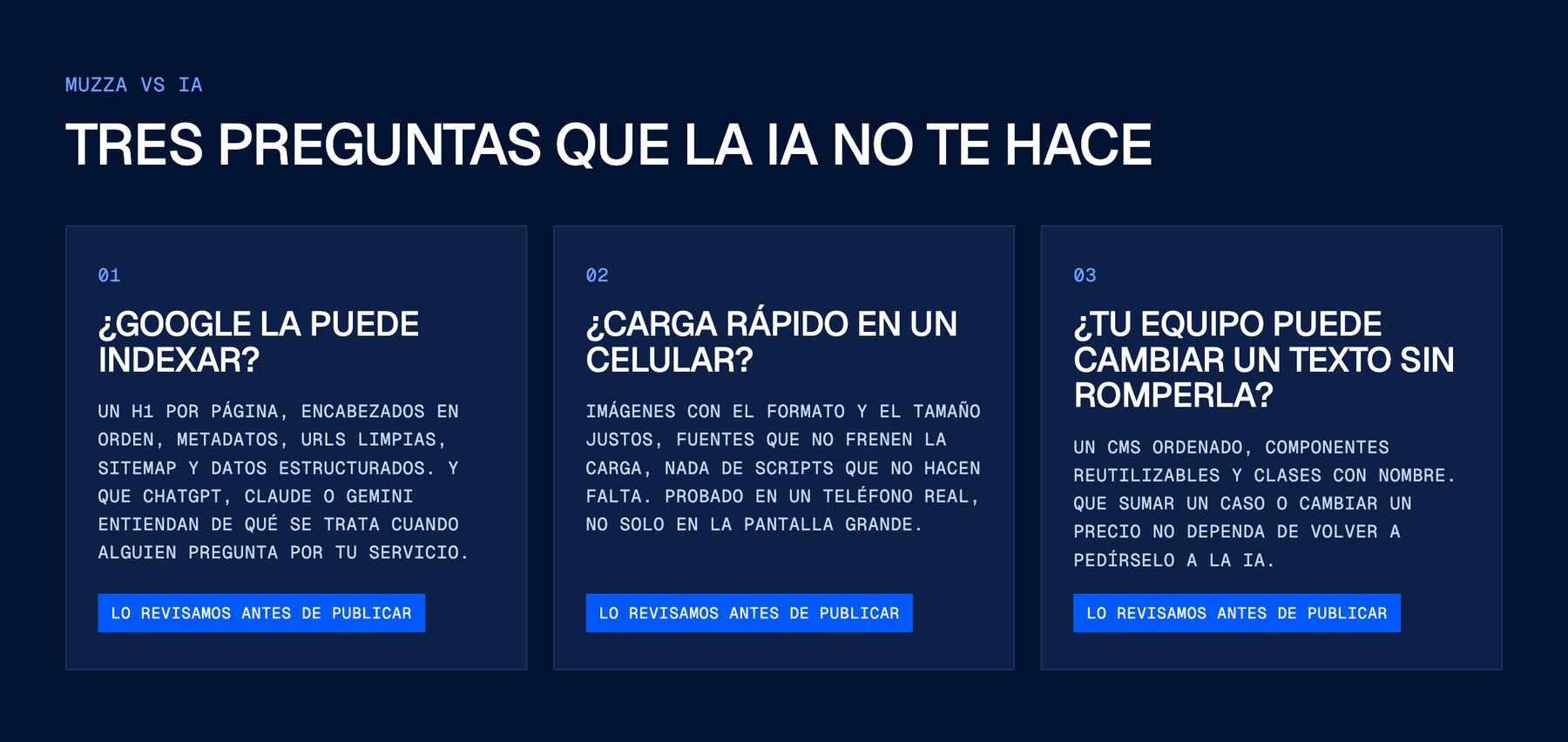
Can Google index it?
A site can look perfect and be almost invisible to search engines. It needs a single main title per page, headings in order, metadata, clean URLs, a sitemap and structured data. And today it also matters that ChatGPT, Claude or Gemini understand what your site is about when someone asks them about a service like yours; that is what is known as AEO.
Does it load fast on a phone?
Images in the right format and size, fonts that don't block loading and no script that isn't needed. Many people will discover your brand on their phone, on a connection that isn't your office's, so we test it there and not only on a big screen.
Can your team change a line of text without breaking it?
A site that comes out of a prompt is usually a block of code that only whoever generated it understands. If tomorrow you need to change a price or add a case study, you depend on asking the AI again and hoping nothing else breaks. We build sites in Webflow or in Next.js with Sanity, with an organized CMS, reusable components and named classes, so your team can edit without fear.
Experience is a best practice too
Best practices don't only come from a manual: they come from launching sites and seeing what happens afterward. Which sections people read and which they skip, which forms get inquiries, which CMS structure holds up after years of changes, which animation adds value and which gets in the way. That is what we bring to every new project, and that is why no site ends up looking like the previous one.
How we use Claude and ChatGPT at Muzza
We don't compete with AI: we use it to work better.
- To explore. We try design directions faster before defining the final version.
- To build. We work with coding assistants in Webflow and Next.js, and everything is reviewed before it goes live.
- So your team can use it. We prepare sites to work with AI agents, with clear rules about what they can and can't change.
AI speeds up the work. The decisions are still ours, and we make them with you.
When is building your website with AI enough?
Not every project needs a studio. If it is a personal project, a proof of concept or a page for a one-off event, ChatGPT or Claude will probably be enough.
A specialized team makes sense when your brand needs to stand out, when the site has to bring in clients from Google or from AI answers, when a team will edit it often or when it has to connect with other systems.
FAQs
Can I build my website with ChatGPT?
Yes. ChatGPT can generate copy, structure and code for a simple page. What it doesn't solve on its own is design direction, your company's real content, technical SEO and maintenance.
Can Claude code a full website?
Claude can write a good part of a website's code. For that site to be well designed, editable, fast and sustainable over time, someone has to make the decisions and review the result.
Does an AI-built website rank on Google?
It can, but not because it was built with AI. What ranks is a site with good structure, useful original content and a solid technical foundation.
Isn't a studio that uses AI the same as doing it myself with AI?
No. The difference is judgment: knowing what to ask for, what to discard, what to review and how to sustain it afterward. That is the work we do.
Want a website that could only be yours?
If you are looking for more than a page put together in an afternoon, tell us what your business does and we will show you how we would approach it.
How much does a website cost in Argentina? What drives the price

It's time to put the pizza in the oven
