


How much does a website cost in Argentina? What drives the price

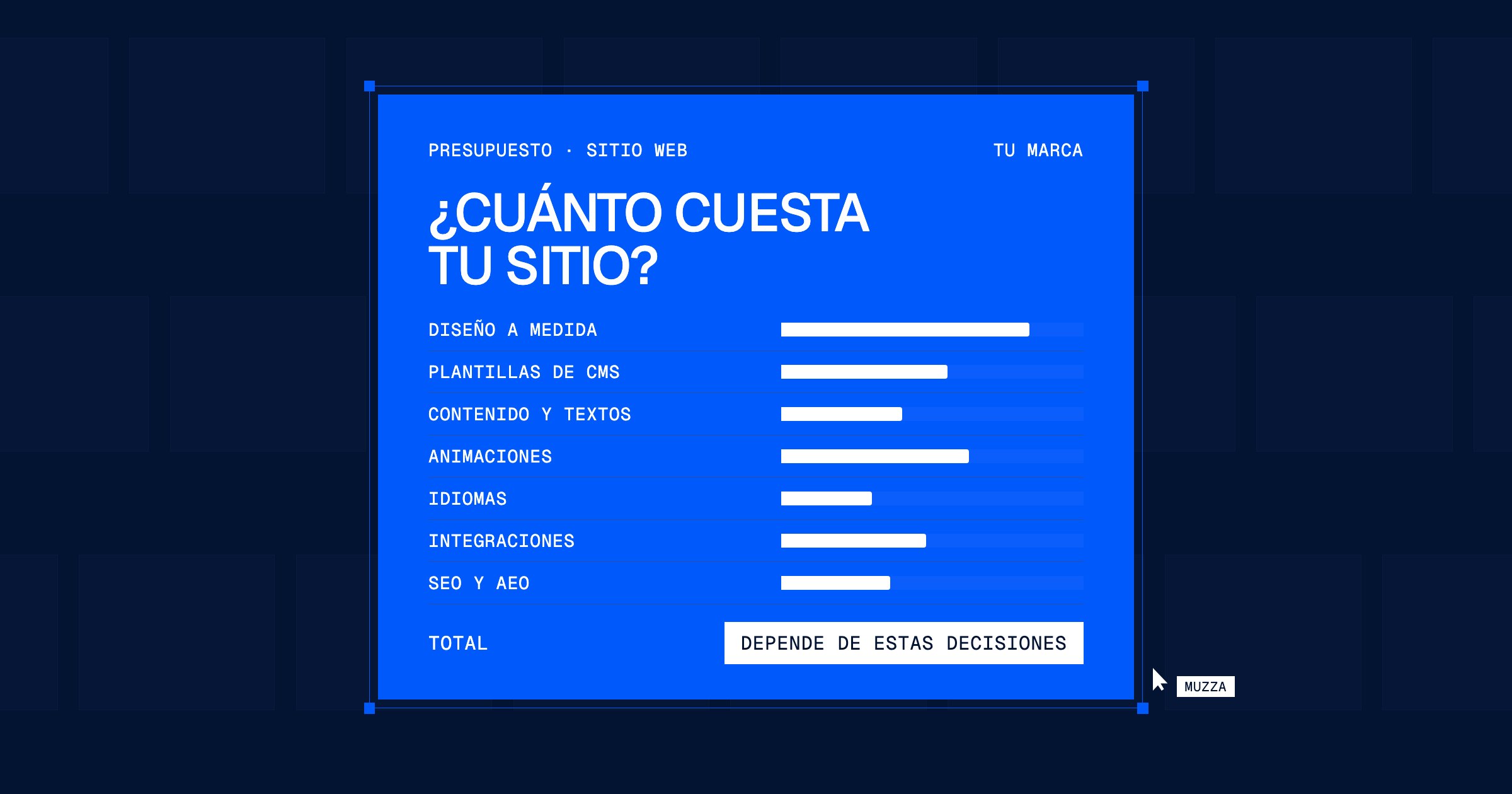
"How much does a website cost?" is the first question we get, and the honest answer is "it depends". The problem is that "it depends" doesn't help anyone decide. So instead of a loose number, in this article we explain what it depends on: which decisions move the budget, which costs show up after launch and how to request quotes you can actually compare.
What drives the price of a website
1. The type of site
A landing page for a campaign doesn't cost the same as a corporate site with several sections, one with a blog and case studies updated every week, or a website that works as a product, with user accounts or integrations. Before comparing numbers, it helps to name what you need.
2. Custom design or template
A template is quick, but your site will look like everyone else's who picked the same one. A custom design starts from your brand and builds a component system that is reused on every new page. It takes more work at the start and saves work every time the site grows. If you are interested in that difference, we cover it in the judgment ChatGPT and Claude don't come with.
3. CMS templates, not number of pages
A common mistake is quoting by number of pages. What matters is how many different types of content there are: a blog, case studies, services, team, FAQs. Each type needs its own structure in the CMS and its own template. A hundred blog posts use the same template; ten different service pages can be ten designs.
4. Who provides the content
If the copy, photos and videos already exist, the project moves faster. If they need to be written, photographed or reorganized from information that is scattered today, that work also needs to be in the budget. It is the most underestimated part, and the one that delays launches the most.
5. Animations and interactions
A simple scroll transition is not the same as a custom animation that supports the reading, like the one we built for our own home page. Both can be fine; what matters is that they add value and don't slow the site down.
6. Languages
Each language adds translation and review, but also its own URL structure, metadata and SEO. Running the copy through a translator is not enough.
7. Integrations
Forms that send contacts to a CRM, payments, bookings, catalogs that update from a spreadsheet or from your system. Each integration involves design, development and testing.
8. Migration, SEO and AEO
If you already have a site with traffic, moving it without losing rankings takes work: a URL inventory, 301 redirects, metadata and structured data. And today it also matters that ChatGPT, Claude or Gemini understand your site when someone asks them about a service like yours.
The platform also changes the math
With Webflow, hosting, the security certificate and platform updates come included in the plan, and the team edits from a visual editor without breaking the design. With WordPress, the design can look similar, but you have to add hosting, plugins and their updates. A Next.js build with a CMS like Sanity makes sense when there are many integrations or the site works as a product. And building it with AI lowers the upfront cost, but leaves out design direction, technical SEO and someone to take care of it afterward.
No platform is cheaper in every case: it depends on how much the site will change and who will edit it.
What you pay after launch

- Every year: the domain and the hosting or Webflow plan, plus any paid tool you use (advanced forms, search, translations).
- Every month, if you need it: maintenance for changes, new landing pages and checks. How it works and what it costs is in this article about Webflow maintenance.
- Every so often: new sections, another language, a campaign or a partial redesign when the business changes.
Fixed-scope project or hour package
We work in two ways, and it helps to know which one fits you before asking for a quote:
- Fixed-scope project: scope, price and timeline defined from day one. It works when you know what you need and want to know exactly what you will get and when.
- Hour package: monthly hours to iterate, add pages or handle whatever comes up. It works when the scope will change or when the site already exists and needs to grow.
As a timeline reference: a landing page usually takes one to two weeks, and a full website with design and development, three to five, depending on the scope.
How to request a quote you can compare
Two quotes "for the same site" can be very different because each studio imagined a different site. For a fair comparison, send everyone the same information:
- What the site needs to achieve: leads, sales, recruiting, investors.
- Which pages and types of content you need (blog, case studies, services).
- Whether the copy and photos are ready or need to be produced.
- Two or three reference sites and what you like about each one.
- Integrations: CRM, forms, payments, bookings.
- Languages and whether there is a current site to migrate.
- Who will edit it afterward and how often.
- Ideal launch date and a budget range.
And when you receive the quotes, check that they state:
- What is included and what isn't: design, development, content, SEO, migration, training.
- How many rounds of changes there are at each stage.
- Whose name the accounts, domain, repository and design files are in. They should be in your company's name.
- What happens after launch: whether there is support and how it is billed.
FAQs
Why do two studios quote such different amounts?
Because they are almost never quoting the same thing. One may be thinking of an adapted template and another of a custom design with CMS, migration and SEO. Ask them to detail the scope and compare point by point.
Is Webflow more expensive than WordPress?
The Webflow plan is a fixed cost that includes hosting and security. In WordPress those costs are spread across hosting, plugins and the time it takes to keep them updated. To compare, add up everything you will pay in a year, not just the launch price.
Can I start small and grow later?
Yes, and it is often the most sensible option: a well-built landing page today and a full website when the business needs it. What matters is that the foundation lets you grow without rebuilding everything.
How long does it take to build a website?
A landing page, one to two weeks. A full website with design and development, three to five weeks depending on the scope. What varies the most is the time it takes to get the content.
Want to know what yours would cost?
Tell us what you need and we will reply with a first assessment of scope, timeline and budget.
Building your website with ChatGPT or Claude: the judgment they don't come with

It's time to put the pizza in the oven
